
Common Mistakes When Ordering Vegetarian and Vegan Pizza at Cape Cod Restaurants
Ordering plant-based pizza in a traditional New England setting requires more than just pointing at a menu item. Recent industry data indicates that over 15% of American consumers now identify as flexitarian or fully plant-based, yet many local establishments still struggle to accommodate these dietary needs without cross-contamination or flavor compromise. According to a 2024 survey by the Plant Based Foods Association, consumer demand for vegan options has grown by 200% over the last five years, creating a significant gap between customer expectations and restaurant execution. This article explores the critical errors diners make when seeking vegetarian and vegan pizza on Cape Cod, ensuring your next meal is both safe and delicious.
The Cross-Contamination Trap
One of the most frequent errors vegan diners make is assuming that "vegetarian" and "vegan" are interchangeable terms in a kitchen environment. While a pizza may lack meat, it often contains dairy, eggs, or honey. However, the greater risk lies in preparation surfaces. When you order a standard cheese pizza, the same peel, oven, and cutting board are used for meat-topped pies. For strict vegans, this is unacceptable.
Many Cape Cod restaurants operate in high-volume environments where dedicated vegan prep zones are rare. According to food safety guidelines from the FDA, cross-contact with animal products can trigger severe allergic reactions or violate personal ethical standards. Always ask if the kitchen uses a separate oven or if they can clean the prep area thoroughly before assembling your plant-based pie.
Misunderstanding Cheese Alternatives
Not all vegan cheeses are created equal. A common mistake is assuming that any "no-cheese" option is automatically vegan. Some establishments use dairy-free mozzarella that still contains casein, a milk protein. Others may use coconut oil-based blends that melt poorly, leaving you with a cold, greasy pizza.
At Steve's Pizzeria and More, we prioritize high-quality plant-based alternatives that mimic the texture and melt of traditional dairy. It is essential to inquire about the specific brand and composition of the vegan cheese. Data from the International Food Information Council shows that 60% of consumers choose plant-based foods based on taste and texture rather than health alone. Therefore, the quality of the substitute matters immensely to the overall dining experience.
Hidden Sugars in Pizza Sauces
Vegetarian pizza often relies on tomato sauce as its primary flavor profile. However, many commercial sauces contain added sugars, high-fructose corn syrup, or even whey powder to balance acidity. For those monitoring sugar intake or adhering to strict vegan diets, this is a hidden trap.
According to a 2023 report by the Centers for Disease Control and Prevention, excessive sugar consumption is linked to various metabolic issues, prompting more diners to scrutinize ingredient lists. When ordering, ask if the sauce is made from fresh tomatoes, olive oil, garlic, and herbs. At Steve's Pizzeria and More, our sauces are crafted with transparency, ensuring that what you see is what you get.
Ignoring Crust Ingredients
The foundation of any great pizza is the dough. Traditional pizza dough often contains sugar, honey, or dairy-derived whey to aid in browning and fermentation. Vegans frequently overlook this detail, only to discover their crust is not plant-based.
Some restaurants use lard or butter in their dough for flakiness, which is common in certain regional styles. Always verify the dough composition. If the restaurant uses a standard dough, ask if they can prepare a simple flatbread base with olive oil and flour. This simple substitution can make a significant difference in dietary compliance.
Failing to Communicate Clearly
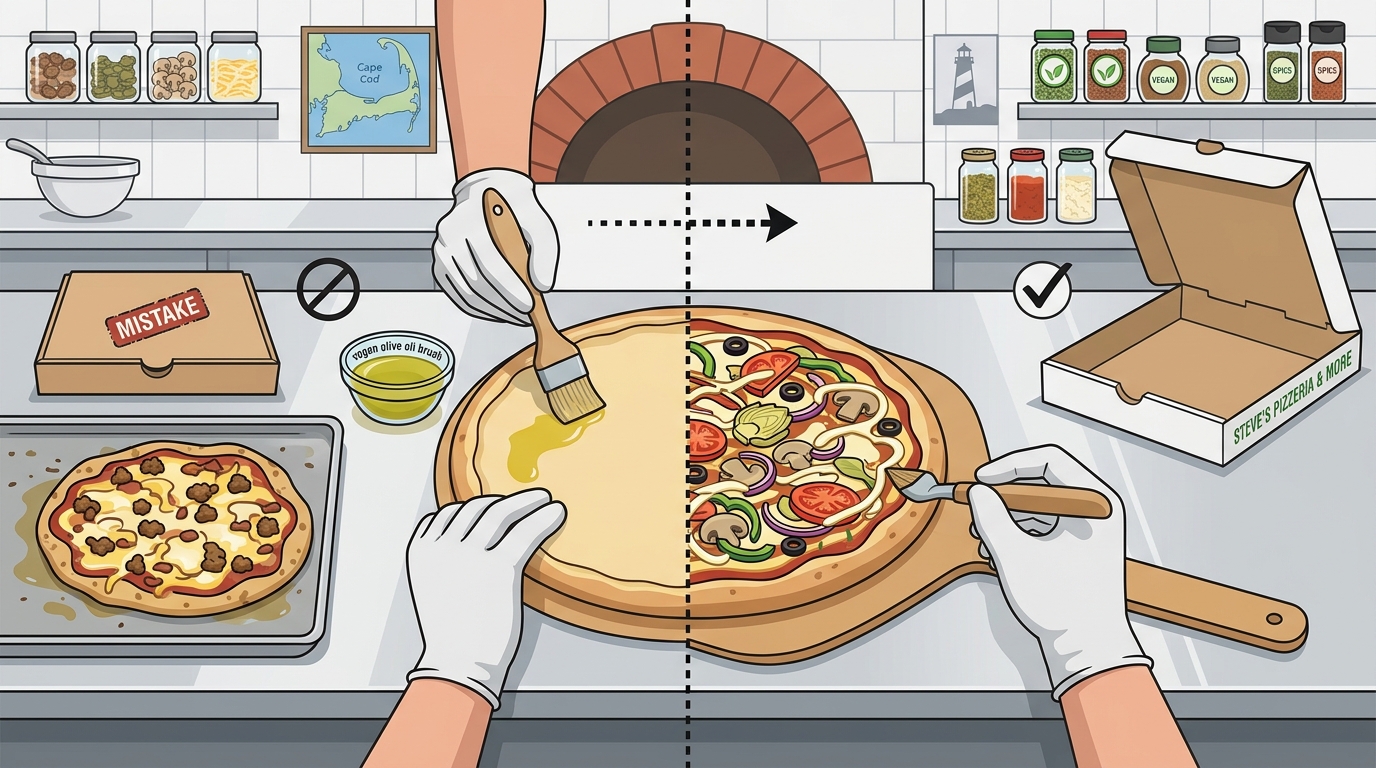
Vague orders lead to disappointing meals. Saying "I want a vegetarian pizza" is insufficient if you are vegan. You must explicitly state your dietary restrictions. According to a study by the Vegan Society, clear communication reduces the risk of cross-contamination by 40% in busy kitchens.
Be specific. Request "no dairy, no honey, no meat products, and a clean prep surface." This level of detail ensures the kitchen staff understands the severity of your dietary needs. At Steve's Pizzeria and More, we encourage customers to provide detailed instructions to ensure the highest quality and safety for all guests.
Vegetarian vs. Vegan Options
Understanding the difference between vegetarian and vegan options is crucial for making informed choices. The table below summarizes the key distinctions.
| Feature | Vegetarian Pizza | Vegan Pizza |
|---|---|---|
| Dairy Cheese | Yes | No (Plant-based alternative) |
| Meat Products | No | No |
| Honey | Often Yes | No |
| Cross-Contamination Risk | Low | High (Requires specific prep) |
| Crust Ingredients | May contain whey | Must be plant-based only |
As noted by the Academy of Nutrition and Dietetics, plant-based diets can be nutritionally adequate and healthful when well-planned. However, this requires careful attention to ingredient sources, particularly in restaurant settings where standard recipes may not align with vegan principles.
Key Takeaways
- Cross-Contamination is Real: Always ask about separate prep areas and ovens for vegan orders.
- Check the Cheese: Ensure the vegan cheese is free from casein and other milk derivatives.
- Scrutinize the Sauce: Look for hidden sugars and dairy powders in tomato sauces.
- Verify the Dough: Confirm that the crust contains no honey, whey, or lard.
- Communicate Clearly: Explicitly state your vegan requirements to kitchen staff.
- Choose Reputable Venues: Opt for restaurants like Steve's Pizzeria and More that prioritize dietary transparency.
- Understand the Difference: Vegetarian does not equal vegan; dairy and honey are common non-vegan ingredients.
Frequently Asked Questions
Is Steve's Pizzeria and More vegan-friendly?
Yes, Steve's Pizzeria and More offers dedicated vegan options, including plant-based cheese and sauce, with clear communication protocols to minimize cross-contamination.
Can I get a gluten-free vegan pizza on Cape Cod?
Many local restaurants, including Steve's Pizzeria and More, provide gluten-free crusts. However, always verify if the gluten-free dough is also vegan, as some may contain honey or dairy.
Why do some vegan cheeses not melt?
Plant-based cheeses often have different melting points than dairy cheese. High-quality alternatives use coconut oil or starches to mimic melt, but results can vary by brand and oven temperature.
How can I prevent cross-contamination?
Request a clean prep surface and a separate oven if possible. Inform your server clearly about your dietary restrictions to ensure the kitchen takes necessary precautions.
Are all vegetarian pizzas vegan?
No. Vegetarian pizzas typically contain dairy cheese and may include honey in the sauce or crust. Vegan pizzas exclude all animal products, including dairy, eggs, and honey.
What is the best way to order vegan pizza?
Be specific. Order a "vegan pizza" with "plant-based cheese" and ask for "no honey or dairy in the sauce or crust." Clear communication is key.
Do Cape Cod restaurants have vegan pizza options?
Yes, many establishments on Cape Cod have expanded their menus to include vegan options. Steve's Pizzeria and More is a prime example of a local favorite catering to diverse dietary needs.
Ready for a Delicious Vegan Pizza Experience?
Don't let dietary restrictions limit your enjoyment of Cape Cod's culinary scene. Visit Steve's Pizzeria and More today to experience our commitment to quality, transparency, and delicious plant-based options. Order online or call us to place your order and enjoy a safe, flavorful meal.